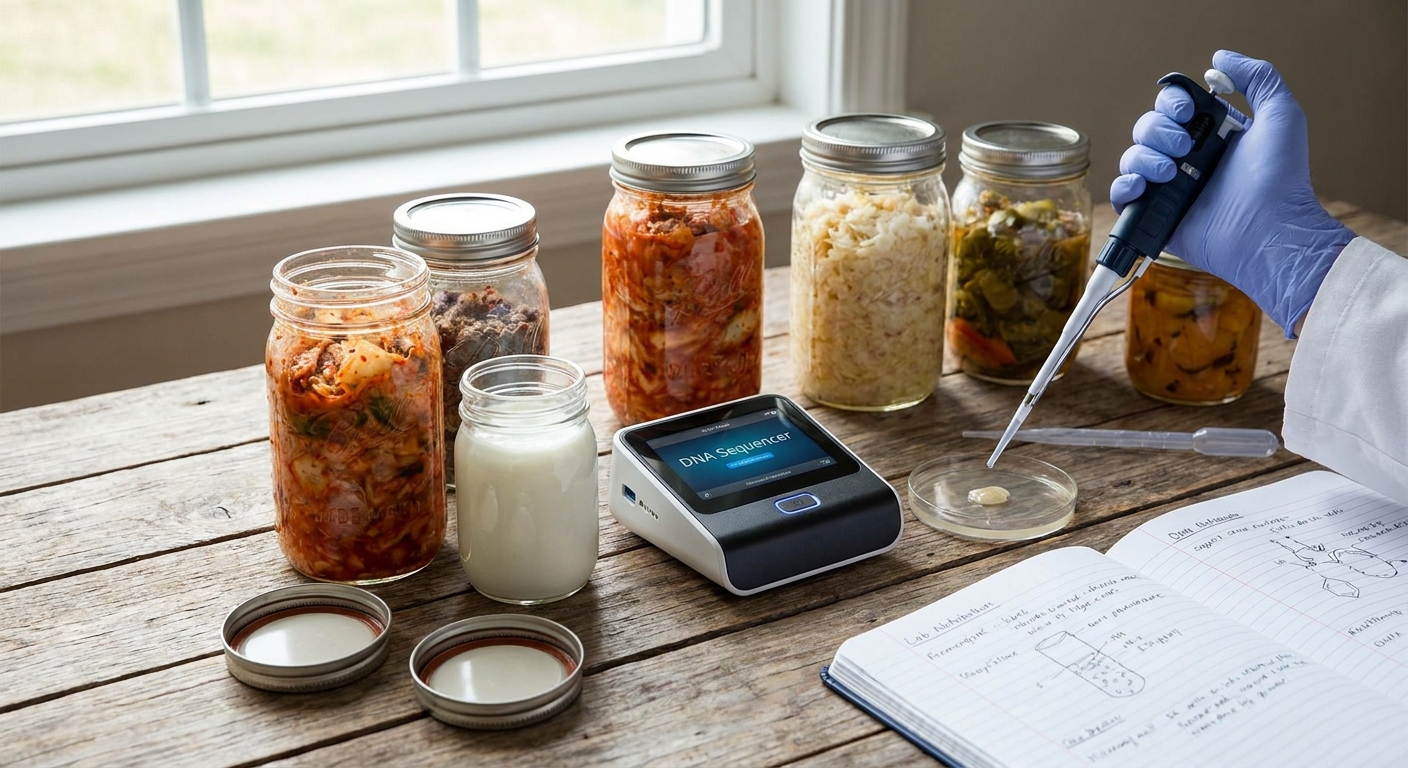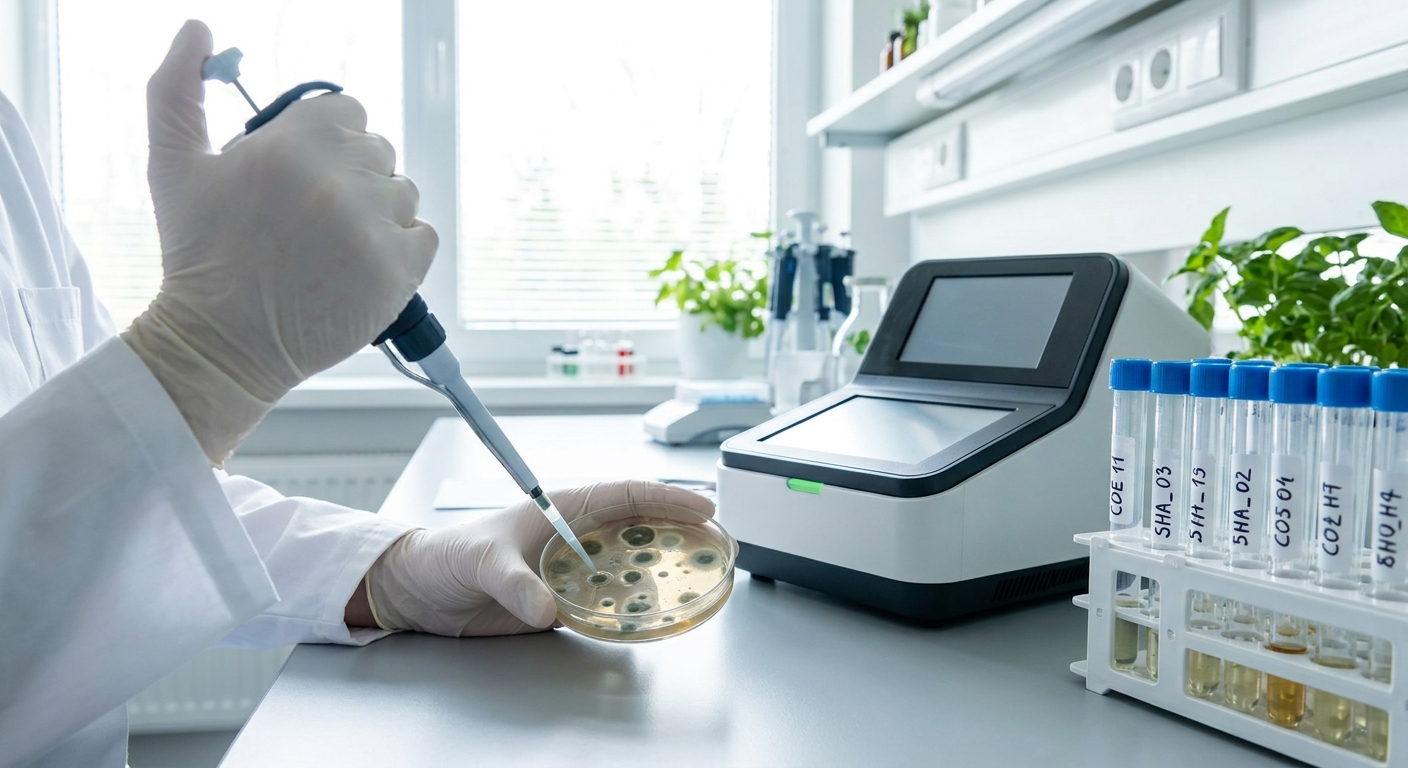

Food safety audits increasingly demand more than a colony count and a biochemical strip — auditors want species-level, sometimes strain-level, proof of what's actually growing in your facility. This guide breaks down what microbial identification for food safety audits actually requires in 2026, which methods hold up under FSSAI and FDA scrutiny, and where teams waste money on identification that won't survive a recall investigation.
- Whole genome sequencing is the only method that gives audit-defensible strain-level resolution for microbial identification for food safety audits in 2026 — Buy.
- 16S rRNA and Sanger confirmation work as fast species-level checks but can't stand alone for outbreak traceback — Consider.
- Culture-only biochemical panels (API strips) are too slow and too coarse for regulatory submission in 2026 — Skip.
- MALDI-TOF is fine as a pre-screen but needs sequencing backup before it goes in an audit file — Consider.
Why this matters
An auditor doesn't care that you ran a test — they care whether the result would hold up if a batch got recalled next month. Species-level identification tells you what organism you found; strain-level identification tells you whether it's the same organism as a prior contamination event, a supplier isolate, or an outbreak strain circulating elsewhere. That distinction is the entire reason regulators shifted surveillance toward whole genome sequencing over the last decade, and it's why a lab offering whole genome sequencing for bacterial outbreak investigation gets asked for by name in supplier qualification documents now.
Getting this wrong costs more than a failed audit. A misidentified isolate that turns out to be the same Listeria monocytogenes strain found in a prior environmental swab is a traceback nightmare — and a paper trail that undercuts your defense in a liability claim.
Who this is for
This is written for food safety managers, QA leads at manufacturing plants, and compliance officers preparing for FSSAI, FDA, or third-party GFSI audits (BRCGS, SQF, FSSC 22000) in 2026 who need identification data that stands up to regulatory review — not just a pass/fail lab report.
What to look for in microbial identification for food safety audits
Species-level accuracy, not presumptive results
A presumptive positive on a chromogenic plate is a screening tool, not an identification. Auditors want confirmed species names backed by sequencing data or validated biochemical profiles with documented accuracy — anything less gets flagged as inconclusive during a plant walkthrough.
Strain-level resolution for traceback
Species-level ID answers "is this Salmonella." Strain-level ID answers "is this the same Salmonella as the one in last quarter's swab." For recall investigations and supplier disputes, only sequencing-based methods (WGS, and to a lesser extent MLST) resolve that question with defensible confidence.
Turnaround against your audit calendar
An audit doesn't wait for a lab. If your identification pipeline takes three weeks and your audit window is ten days, the data arrives too late to matter. Confirm turnaround in writing before the sample ships, not after.
ISO accreditation and chain-of-custody documentation
Auditors ask for the lab's accreditation certificate as often as they ask for the result itself. A report from an ISO 9001:2015-certified genomics lab with documented sample chain-of-custody carries weight a spreadsheet from an uncertified vendor doesn't.
Data format compatible with regulatory submission
Raw FASTQ files impress nobody in an audit binder. You need identification reports formatted for FSSAI or FDA submission — species/strain call, method used, reference database version, and a signed accreditation statement.
Cost transparency at scale
If you're testing dozens of environmental swabs per quarter, per-sample pricing that looks reasonable at one unit can blow past budget at fifty. Get volume pricing in writing before committing to a pipeline.
Top picks for microbial identification for food safety audits
Whole genome sequencing (WGS) pathogen identification — the gold-standard pick. It resolves organisms down to strain level via SNP-based phylogenetic comparison, which is what regulators expect for outbreak-linked recalls in 2026. Yaazh Xenomics runs this on an ISO 9001:2015-certified pipeline with documented turnaround windows agreed before sample intake. If your audit involves any recall history or supplier dispute, this is the method the file needs. Buy.
Sanger sequencing / amplicon confirmation — the fast confirmatory pick. Once a presumptive isolate is flagged, Sanger sequencing for plasmid confirmation-style amplicon confirmation gives species-level certainty in days, not weeks, at a fraction of WGS cost. It won't give you strain-level traceback on its own, but paired with WGS on flagged isolates it closes the loop fast. Buy as a confirmatory layer, Consider only if used alone.
Microbial identification built for regulated QC pipelines — the audit-ready pick. The same rigor pharmaceutical manufacturers demand for microbial identification for pharmaceutical quality control applies directly to food facilities under GFSI schemes: validated methods, documented reference databases, and reports written for auditors rather than scientists. Buy if your facility runs under BRCGS or FSSC 22000.
MALDI-TOF mass spectrometry — the fast screening pick. Good for triaging large batches of isolates quickly at low per-sample cost, and useful before deciding which isolates warrant sequencing. It's a screen, not a final answer, and most auditors know the difference. Consider as a pre-screen only.
Culture-based biochemical panels (API strips, chromogenic media) — the legacy pick. Cheap, familiar, and still common in smaller labs, but resolution stops at genus or species level with real ambiguity on close relatives, and turnaround for confirmatory biochemical series can run 5-7 days on its own. For 2026 audit documentation where traceback matters, this method alone doesn't hold up. Skip as a standalone identification method.
What to avoid
- Treating 16S rRNA sequencing as strain-level proof. It reliably separates genus and most species, but many closely related strains share near-identical 16S sequences — it will not tell you if two isolates are the same outbreak strain.
- Skipping chain-of-custody paperwork to save time. A perfect sequencing result with no documented sample handling trail is legally weaker than a mediocre result with clean documentation.
- Choosing a lab on price alone without confirming ISO accreditation. An uncertified result can get an entire audit finding thrown out, regardless of how accurate the underlying science is.
Need audit-ready pathogen ID fast?
Get strain-level identification with documented turnaround before your audit window closes.
Verdict comparison
| Method | Resolution | Typical turnaround | Audit-ready in 2026 | Verdict |
|---|---|---|---|---|
| Whole genome sequencing | Strain-level | ~5-7 business days | Yes | Buy |
| Sanger / amplicon confirmation | Species-level | 2-3 business days | Yes, as confirmation | Buy |
| Regulated QC microbial ID pipeline | Species/strain | Varies by scope | Yes | Buy |
| MALDI-TOF | Species-level | Same-day to 1 day | Screen only | Consider |
| Culture / biochemical panels | Genus/species, ambiguous | 3-7 days | Weak alone | Skip |
FAQ
What is microbial identification for food safety audits?
It's the process of confirming which bacterial, yeast, or mold species are present in a food facility sample, using methods ranging from culture panels to whole genome sequencing, documented in a format regulators and auditors accept in 2026.
Is whole genome sequencing better than 16S rRNA for food safety audits?
Yes, whole genome sequencing resolves strain-level differences that 16S rRNA cannot, which matters for recall traceback and outbreak investigation. 16S rRNA remains useful for fast species-level screening at lower cost.
How much does microbial identification cost for a food safety audit?
Cost depends on method and volume — biochemical panels are cheapest per sample, sequencing-based identification costs more per isolate but scales better across large environmental monitoring programs. Get volume pricing in writing before committing.
How long does microbial identification take before an audit?
Sanger-based confirmation typically returns in 2-3 business days, while whole genome sequencing for strain-level identification runs closer to 5-7 business days in 2026. Confirm turnaround in writing against your audit calendar before shipping samples.
Do auditors accept MALDI-TOF results alone?
Most auditors treat MALDI-TOF as a screening tool rather than final identification, especially for recall-linked investigations in 2026. Pairing it with sequencing confirmation on flagged isolates is the safer documentation path.
What accreditation should a microbial identification lab have?
Look for ISO 9001:2015 certification at minimum, along with documented chain-of-custody procedures for every sample. Accreditation status is one of the first things auditors ask to see alongside the identification report.
Can culture-based methods identify bacteria to the strain level?
No, biochemical panels and culture-based identification typically resolve to genus or species level with occasional ambiguity between close relatives. Strain-level resolution for traceback requires sequencing-based methods like whole genome sequencing.
What format should microbial identification reports be in for regulatory submission?
Reports should include the confirmed species or strain call, the method used, the reference database version, and a signed accreditation statement — raw sequencing files alone are not sufficient for FSSAI or FDA submission.
One last thing
The detail most QA teams miss: a Salmonella isolate identified only to species level tells an auditor almost nothing useful during a recall, because dozens of serotypes behave completely differently in terms of risk and source tracing. Strain-level resolution through whole genome sequencing is what separates a documentation exercise from evidence that actually protects you in 2026, and it's the gap between a lab report that satisfies a checklist and one that satisfies an investigator.