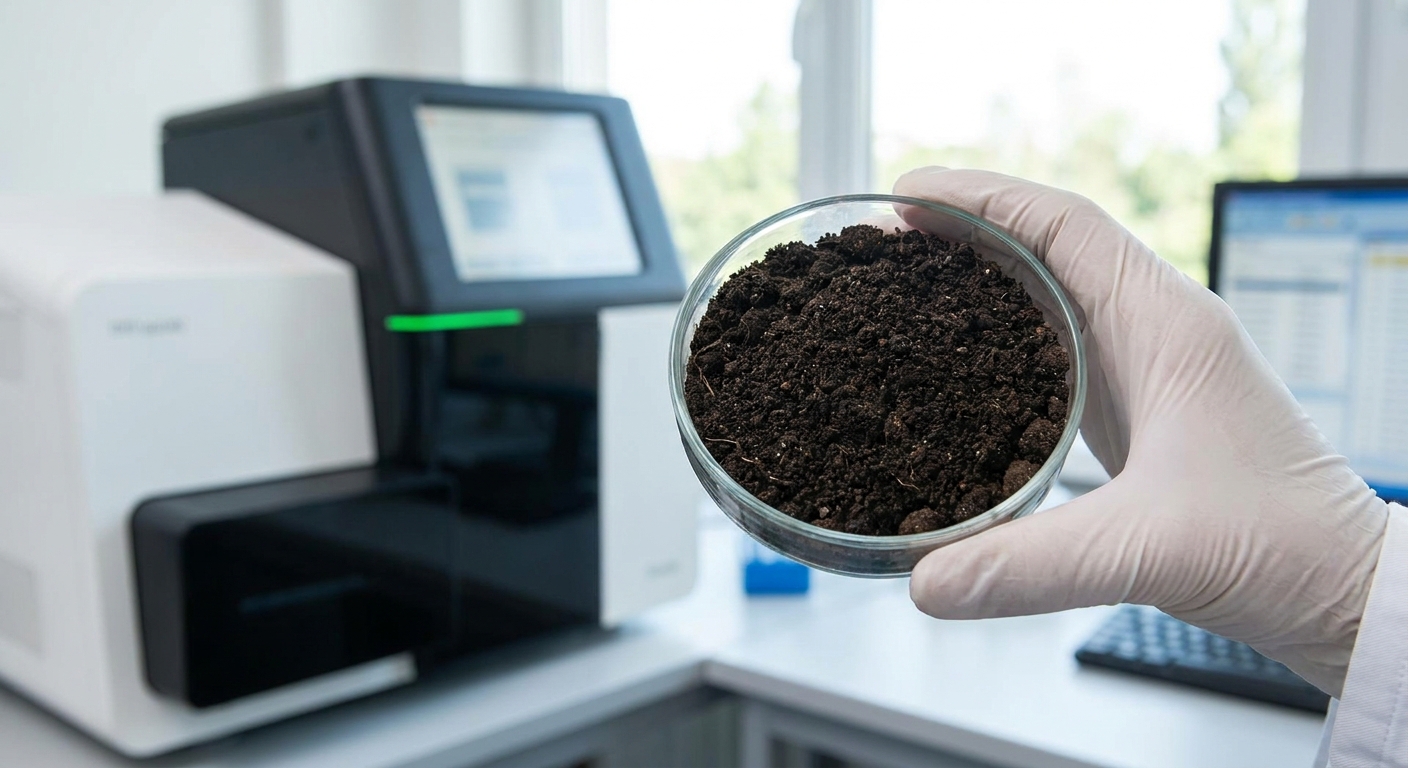
Soil microbiome studies live or die on sequencing depth and extraction quality, and metagenome sequencing for soil microbiome projects needs a different playbook than gut or clinical metagenomics.
- Shotgun metagenomic sequencing at 10-15 Gb per sample wins for functional profiling of rhizosphere communities — Buy.
- 16S/ITS amplicon panels work for cheap cohort screening but miss gene-level function — Consider, not a replacement.
- Hybrid long-read plus short-read assembly recovers metagenome-assembled genomes above 90% completeness — Buy for novel taxa.
- Skipping humic acid removal during soil DNA extraction is the most common cause of failed libraries in 2026 soil projects.
Why this matters
Soil is the densest microbial habitat on the planet — a single gram can hold thousands of species, most of them never cultured. Amplicon panels built for gut or clinical microbiome work under-sample that diversity and say nothing about function.
Metagenome sequencing for soil microbiome research needs shotgun-level depth, contamination-aware extraction protocols, and a bioinformatics pipeline built for high-complexity assemblies, not a repurposed clinical NGS workflow. Yaazh Xenomics runs ISO 9001:2015 certified NGS and bioinformatics pipelines built around exactly this kind of complexity, from exome-scale clinical panels to environmental metagenomics.
Get the sample type right — soil, not stool or blood — and the read depth, primer choice, and QC thresholds all change with it.
Who this is for
This guide is for soil microbiologists, agricultural biotech teams, environmental consultants, and academic PIs running rhizosphere, bulk soil, or contaminated-site microbiome studies in 2026. If your study needs functional gene content, strain-level resolution, or novel taxa discovery — not just a species list — the sequencing strategy below applies directly to your project design.
What to look for in metagenome sequencing for soil microbiome studies
Read depth built for high-diversity samples
Soil communities routinely carry thousands of species per gram, several orders of magnitude more than gut or oral samples. A shotgun run under 5 Gb per sample leaves rare taxa and low-abundance functional genes undetected. For most rhizosphere and bulk soil studies, 10-15 Gb per sample is the practical floor for both taxonomic and functional resolution.
Shotgun vs amplicon strategy
16S rRNA (bacteria/archaea) and ITS (fungi) amplicon sequencing is cheaper and faster, and it's the right call for large cohort screening where you just need community structure. It cannot tell you what genes those organisms carry. If your study asks what a community can do rather than who is in it, shotgun metagenomics is not optional.
Extraction protocol built for humic acid contamination
Soil DNA extraction has to clear humic acids and other polyphenolic compounds that inhibit PCR and library prep — the single biggest failure point in soil metagenomics that clinical labs rarely deal with. A validated soil-specific extraction kit with bead-beating and a humic acid cleanup step matters more than which sequencer you pick.
Assembly and binning pipeline
Raw reads are useless without an assembly and binning pipeline built for co-abundance binning across samples, not a single-genome assembler repurposed for metagenomes. Ask what completeness and contamination thresholds the lab reports metagenome-assembled genomes (MAGs) against — the MIMAG standard sets high-quality drafts above 90% completeness and below 5% contamination.
Negative controls and low-biomass handling
Rhizosphere and subsurface soil samples can carry low microbial biomass, which means extraction kit contaminants and reagent-borne DNA can swamp real signal. Blank extraction controls sequenced alongside real samples are standard QC, not an optional add-on.
Turnaround and batch scheduling
Field studies mean sample cohorts arriving in batches across a season, not one-off submissions. Confirm the lab batches samples on a schedule that matches your fieldwork calendar rather than a fixed weekly cutoff that forces you to hold cold samples.
Plan your soil metagenomics run
Talk through depth, extraction, and MAG QC before you submit samples.
Top picks for soil microbiome sequencing
Shotgun metagenomic sequencing — the workhorse pick
Illumina-class shotgun sequencing at 10-15 Gb per sample gives both taxonomic and functional resolution in one run. It's the only approach here that answers who's there and what they can do at once. Verdict: Buy for any study needing pathway, gene, or functional annotation.
16S/ITS amplicon sequencing — the budget screen
V3-V4 16S amplicons run around 465 bp and stay cheap enough to screen 200+ samples across a field season. Fine for community structure comparisons across treatments or timepoints, useless for functional claims. Verdict: Consider for large cohort screening, not for anything mechanistic.
Hybrid long-read plus short-read assembly — the MAG builder
Pairing long reads with short-read polishing recovers metagenome-assembled genomes at over 90% completeness and under 5% contamination, the MIMAG bar for high-quality drafts. This is what pulls a novel, uncultured soil taxon out of a complex community instead of just naming its closest relative. Verdict: Buy for novel taxa discovery or strain-level resolution work.
Whole-genome sequencing of cultured isolates — the deep dive
When you've isolated a candidate plant-growth-promoting bacterium or a suspect soil pathogen, single-isolate whole-genome sequencing gives you a complete, contiguous genome instead of a fragmented MAG. The same bacterial whole-genome sequencing workflow used for outbreak investigation applies directly to a soil isolate once it's in pure culture. Verdict: Buy once you have a pure culture and a specific hypothesis about that strain.
Metagenomics tied to a breeding or agronomy program — the applied angle
Soil microbiome data pays off when it links back to plant performance — root colonization, nutrient cycling, disease suppression. Teams running plant breeding program sequencing alongside rhizosphere metagenomics can correlate host genotype with microbiome composition in the same trial. Verdict: Consider if your soil work sits inside a larger breeding trial — skip the extra layer for a standalone ecology study.
“16S amplicon data alone cannot tell you what a soil community can do — only shotgun metagenomics can.”
What to avoid
- Amplicon-only design when you need function. 16S and ITS panels report community composition, not gene content — don't submit amplicon data and then expect pathway or functional claims in the report.
- Skipping the humic acid cleanup step. Standard clinical or food-safety extraction kits aren't built for soil's polyphenolic load; libraries fail or show heavy 3' bias without a soil-specific cleanup step.
- No blank extraction controls on low-biomass samples. Subsurface and root-zone samples with low microbial load pick up kit and reagent contaminants that read as real signal without a blank run alongside them.
Verdict comparison table
| Approach | Resolution | Best for | Typical output | Verdict |
|---|---|---|---|---|
| Shotgun metagenomics | Taxonomic + functional | Pathway/gene-level questions | 10-15 Gb/sample | Buy |
| 16S/ITS amplicon | Taxonomic only | Large cohort screening | ~465 bp amplicon | Consider |
| Hybrid long+short read | Strain/genome-level | Novel taxa, MAG recovery | MAGs >90% complete | Buy |
| Isolate whole-genome sequencing | Single-genome, complete | Confirmed candidate strains | Closed/near-closed genome | Buy (post-isolation) |
FAQ
What is metagenome sequencing for soil microbiome studies?
It is shotgun sequencing of all DNA extracted directly from a soil sample, giving both species identity and functional gene content without culturing organisms first. It differs from amplicon sequencing, which only reports taxonomy.
Is shotgun metagenomics better than 16S sequencing for soil?
For functional questions, yes — shotgun metagenomics reveals gene content that 16S amplicon sequencing cannot. For simple community structure comparisons across many samples, 16S remains the cheaper, faster option in 2026.
How much sequencing depth does a soil sample need?
Most rhizosphere and bulk soil studies need 10-15 Gb per sample to capture rare taxa and low-abundance genes. Highly diverse or contaminated-site soils sometimes need more depth to hit the same resolution.
Can metagenomics identify unculturable soil bacteria?
Yes — shotgun metagenomics sequences DNA directly from soil, so organisms that never grow on a plate still show up in the data. Hybrid long-read assembly further improves recovery of complete genomes from these uncultured taxa.
What is a metagenome-assembled genome (MAG)?
A MAG is a genome reconstructed by binning contigs from a metagenomic assembly rather than from a single isolate. The MIMAG standard classifies a MAG as high-quality when it is over 90% complete and under 5% contaminated.
Do soil microbiome studies need long-read sequencing?
Long reads help when the goal is recovering complete, high-quality MAGs from complex communities, since they resolve repeats that short reads leave fragmented. Short-read-only shotgun sequencing is still enough for straightforward taxonomic and functional profiling.
How is soil microbiome sequencing different from clinical microbiome sequencing?
Soil samples carry humic acids and polyphenolics that inhibit PCR and library prep, requiring a different extraction protocol than blood, stool, or swab samples. Soil communities are also far more diverse, which pushes read depth requirements higher.
What DNA extraction method works best for soil samples?
A bead-beating protocol paired with a dedicated humic acid removal step is the standard for soil in 2026. Kits validated for clinical or food samples routinely under-perform on soil because they aren't built to clear that contaminant load.
One last thing
Protocols built for pathogen surveillance or clinical samples routinely under-perform on soil because they're tuned to a completely different contamination profile and biomass range. The extraction step, not the sequencer, decides whether your 2026 soil microbiome dataset is usable — get that right before comparing platforms.