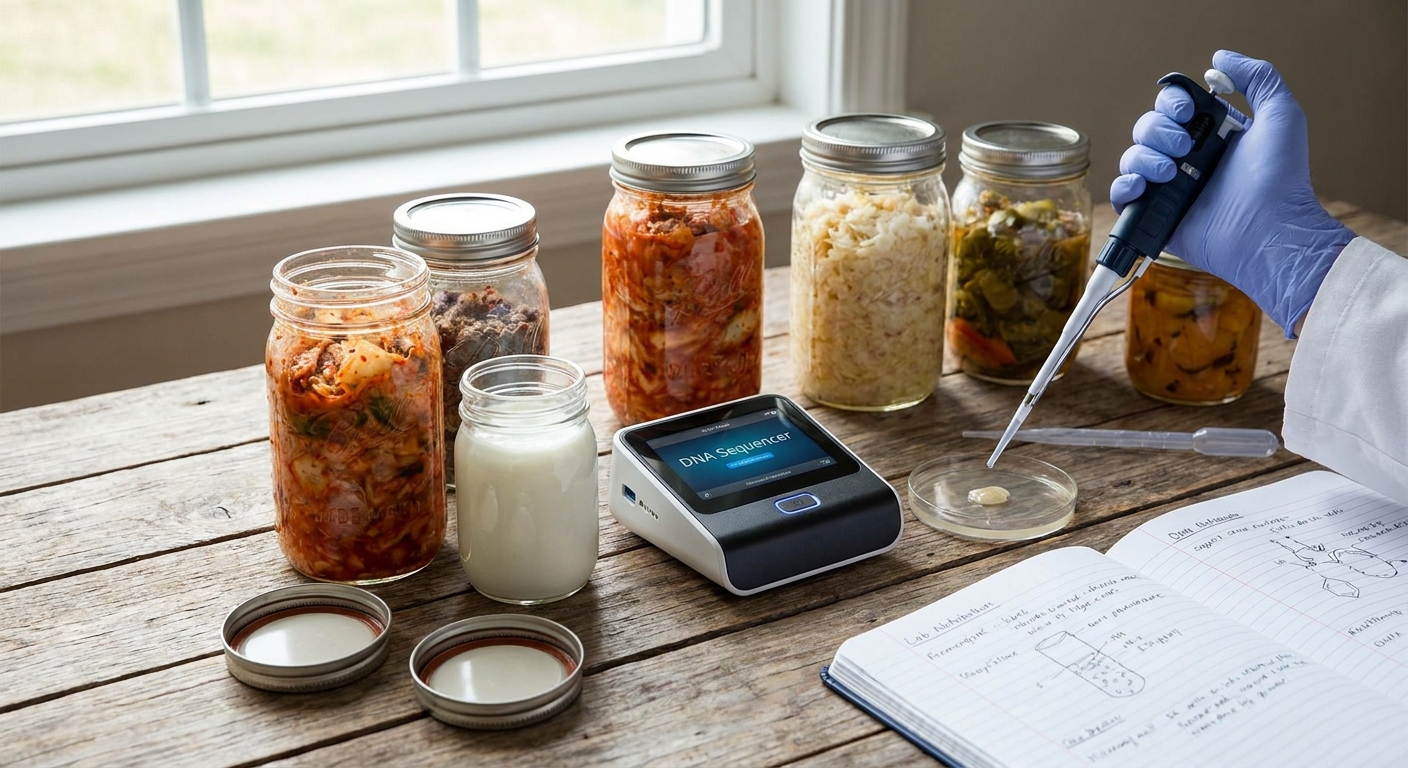
NGS for cancer biomarker discovery is how oncology research teams find the mutations, fusions, and expression signatures that separate a treatable tumor from an unmatched one, and choosing the wrong sequencing strategy wastes tissue, budget, and months of study timeline.
- Targeted panels (50-500 genes) are the safe pick for hotspot mutation screening in 2026 clinical cohorts - Buy.
- Whole exome sequencing covers roughly 85% of disease-relevant coding variants and is the standard for discovery-phase cancer biomarker studies - Consider.
- Whole genome sequencing at Yaazh Xenomics captures structural variants panels miss, but costs more per sample - Consider for structural rearrangement work, Skip for routine hotspot screening.
- Liquid biopsy ctDNA sequencing needs 1000x-plus depth to detect variants below 0.1% VAF - Buy only if the lab can prove that depth.
- RNA-seq catches fusion events like ALK and ROS1 that DNA-only panels routinely miss - Consider as a companion assay, not a replacement.
Why this matters
Cancer biomarker discovery lives or dies on assay choice made before the first sample hits a sequencer. Pick a panel too narrow and you miss the fusion or copy-number event that explains resistance. Pick whole genome sequencing for a routine hotspot screen and you burn budget and turnaround time you didn't need to spend.
A genomics lab such as Yaazh Xenomics runs NGS, Sanger confirmation, and bioinformatics pipelines under ISO 9001:2015 process controls, which matters because biomarker calls that feed clinical or regulatory decisions need traceable QC at every step, not just a FASTQ file and a spreadsheet. In 2026, the difference between a discovery-grade result and a publication-grade one usually comes down to depth of coverage, panel design, and whether the bioinformatics pipeline was validated against a known truth set.
Who this is for
This guide is built for biotech and pharma teams running translational oncology studies, academic labs designing biomarker discovery cohorts, and clinical research groups that need NGS-based cancer biomarker discovery data to support a publication, an IND filing, or a companion diagnostic hypothesis. If you're choosing between a targeted panel, exome, genome, or RNA-based assay for a tumor cohort in 2026, the criteria below apply directly to your sourcing decision.
What to look for in NGS for cancer biomarker discovery
Analytical sensitivity and coverage depth
A panel run at 500x mean coverage will miss subclonal variants a 1000x-plus run catches, and for liquid biopsy ctDNA work the limit of detection matters more than gene count. Confirm the lab's stated depth per sample type before committing tissue you can't recollect.
Panel scope versus exome or genome breadth
Targeted panels answer a known hypothesis fast; whole exome sequencing (WES) covers roughly 1-2% of the genome but captures around 85% of known disease-causing coding variants, which makes it the workhorse for open-ended discovery cohorts. Whole genome sequencing (WGS) adds non-coding regulatory regions and structural variant calls that WES and panels both miss entirely.
Validated bioinformatics pipeline
Raw reads mean nothing without a variant-calling pipeline validated against a reference truth set, with reproducible TMB and MSI reporting. Ask whether the lab's pipeline has been benchmarked, and whether TMB is reported using the field-standard 10 mutations-per-megabase cutoff used for immunotherapy-eligibility studies.
Sample type compatibility
FFPE tissue, fresh-frozen tumor, and cell-free DNA from plasma each degrade differently and need different library prep chemistry. A lab that only optimizes for one sample type will quietly under-perform on the others, and you won't see it until QC fails mid-cohort.
Turnaround time matched to study design
Discovery cohorts running dozens of samples in parallel need batching discipline, not just a fast single-sample turnaround. Ask for real batch-level timelines, not best-case single-sample numbers.
Accreditation and reporting format
ISO-certified process control (ISO 9001:2015, in Yaazh Xenomics' case) signals documented QC at every step from extraction to final variant call, which matters when biomarker data eventually needs to survive peer review or regulatory scrutiny.
Scope your cancer biomarker NGS project
Match panel, exome, genome, or RNA-seq to your cohort before you commit tissue.
Top picks: NGS approaches for cancer biomarker discovery
Targeted gene panels — the safe pick
A 50-500 gene hotspot panel is built for known-actionable mutations (EGFR, KRAS, BRAF, and similar) and runs faster and cheaper per sample than exome or genome sequencing. Depth of 500x-1000x is typical for these panels, enough to call clonal and many subclonal variants reliably. Verdict: Buy for cohorts built around a known hypothesis or a validated gene list.
Whole exome sequencing — the discovery workhorse
WES sequences the roughly 1-2% of the genome that codes for proteins, capturing an estimated 85% of disease-relevant coding variants without the cost of full genome coverage. It's the default choice when a cohort's biomarker isn't known yet and the study needs breadth across thousands of genes. Verdict: Buy for open discovery-phase cancer biomarker studies in 2026.
Whole genome sequencing — the comprehensive pick
WGS covers the full ~3.2 billion base genome, including non-coding regulatory regions and structural rearrangements that panels and exomes both miss by design. Cost per sample runs meaningfully higher than a panel, and turnaround scales with the extra data volume — the whole genome sequencing cost in India guide breaks down what drives that price. Verdict: Consider when structural variants or non-coding regulation are part of the biomarker hypothesis, Skip for routine hotspot screening where a panel already answers the question.
RNA-seq / transcriptome profiling — the companion assay
DNA panels routinely miss fusion events like ALK, ROS1, and RET rearrangements in non-small cell lung cancer because those events show up at the transcript level, not always as a clean DNA breakpoint. RNA-seq adds expression-level context DNA sequencing alone can't provide. Verdict: Consider as a paired assay alongside a DNA panel or exome, not a standalone biomarker strategy.
Liquid biopsy ctDNA sequencing — the longitudinal tool
Circulating tumor DNA sequencing needs depth well above 1000x to reliably detect variants below 0.1% variant allele frequency, since ctDNA fraction in plasma is often a small percentage of total cell-free DNA. Done right, it enables serial sampling across treatment without repeat biopsy. Verdict: Buy for longitudinal resistance-monitoring cohorts, Skip if the lab can't demonstrate depth and duplicate-rate QC at that sensitivity threshold.
What to avoid
- Low-depth panels sold as liquid biopsy-ready. A 500x panel that works fine on tissue will underperform badly on plasma ctDNA, where sensitivity requirements are an order of magnitude higher.
- Single-timepoint sampling for clonal evolution studies. If the biomarker question involves resistance or relapse, one sample per patient can't show you the clone that emerged under treatment pressure.
- Unvalidated bioinformatics pipelines presented as "custom." Ask what truth set the variant caller was benchmarked against; a pipeline without a stated validation reference is a black box, not a feature.
Verdict comparison table
| Approach | Typical Depth | Best For | Cost Tier | Verdict |
|---|---|---|---|---|
| Targeted panel (50-500 genes) | 500x-1000x | Known hotspot mutations | Low | Buy |
| Whole exome sequencing (WES) | 100x-200x | Open discovery cohorts | Mid | Buy |
| Whole genome sequencing (WGS) | 30x-60x | Structural variants, regulatory regions | High | Consider |
| RNA-seq / transcriptome | Varies by read depth | Fusion and expression biomarkers | Mid | Consider |
| Liquid biopsy ctDNA | 1000x+ | Longitudinal, non-invasive monitoring | High | Buy for monitoring cohorts |
FAQ
What is the best NGS approach for cancer biomarker discovery in 2026?
There isn't one universal answer: targeted panels win for known-hotspot cohorts, whole exome sequencing wins for open discovery studies, and whole genome sequencing wins when structural variants or non-coding regions matter. Match the assay to the hypothesis before choosing.
Is whole exome sequencing better than a targeted panel for cancer biomarkers?
WES covers roughly 85% of known disease-causing coding variants across the whole exome, while a targeted panel covers far fewer genes at higher depth. WES wins for discovery-phase work; a panel wins when the biomarker hypothesis is already narrow and known.
How much does NGS for cancer biomarker discovery cost in India?
Cost depends heavily on assay type: targeted panels run cheapest per sample, whole exome sits in the middle, and whole genome sequencing costs the most because of data volume and depth requirements. The whole genome sequencing cost in India guide breaks down the specific cost drivers for that assay.
What coverage depth do you need for ctDNA liquid biopsy sequencing?
Reliable detection of ctDNA variants below 0.1% variant allele frequency generally needs depth above 1000x. Lower depth panels marketed for liquid biopsy will miss low-frequency variants that matter for early resistance detection.
What is tumor mutational burden (TMB) and why does it matter for biomarker discovery?
TMB counts the number of mutations per megabase of sequenced tumor DNA, and a cutoff around 10 mutations per megabase is the field-standard threshold used to flag TMB-high tumors for immunotherapy eligibility studies. NGS panels and exomes both can report TMB if the pipeline is validated for it.
Can RNA-seq replace DNA sequencing for cancer biomarker discovery?
No. RNA-seq adds fusion and expression-level detection that DNA panels miss, but it doesn't replace DNA-level mutation calling. Most 2026 discovery cohorts pair RNA-seq with a DNA panel or exome rather than running RNA-seq alone.
How long does NGS turnaround take for a cancer biomarker cohort?
Turnaround depends on assay type and batch size, with targeted panels typically returning faster than whole genome runs due to lower data volume. Ask for batch-level timelines rather than single-sample best-case numbers when scoping a cohort.
Do I need ISO-certified sequencing for biomarker discovery research?
If the biomarker data will eventually support a publication, regulatory filing, or clinical decision, ISO-certified process control (such as ISO 9001:2015) provides the documented QC trail reviewers expect. Purely exploratory internal screening can tolerate lower documentation overhead.
One last thing
The single most common mistake in cancer biomarker discovery cohorts isn't picking the wrong assay — it's picking one assay and stopping there. Fusion events like ALK and ROS1 rearrangements simply don't show up reliably on DNA-only panels, and structural variants don't show up on exomes at all by design. Teams that pair a DNA panel or exome with RNA-seq for the same cohort catch biomarker classes a single-assay strategy misses entirely, and that pairing costs a fraction of what a failed clinical hypothesis costs later. Yaazh Xenomics' work across NGS, exome/WGS, and bioinformatics reporting reflects that same layered logic: the right combination of assays, not the single most expensive one, is what actually finds the biomarker.